Tipsa dina vänner om produkten:
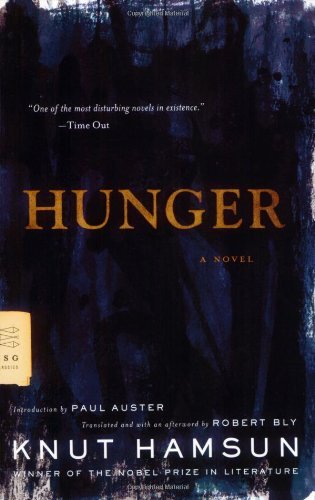
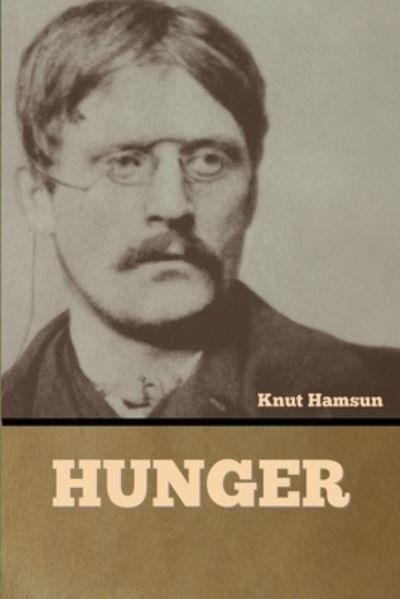
Hunger Knut Hamsun
Beställningsvara
 Julklappar kan bytas fram till 31:e januari



Finns även som:
- Pocketbok (2018) SEK 159
- Pocketbok (2015) SEK 159
- Pocketbok (2003) SEK 169
- Pocketbok (2017) SEK 169
- Pocketbok (2015) SEK 169
- Pocketbok (2019) SEK 179
- Pocketbok (2017) SEK 179
- Pocketbok (2014) SEK 179
- Pocketbok (2012) SEK 189
- Pocketbok (2009) SEK 199
-
PocketbokOpen Market Ed edition(1998) SEK 219
- Bok (2023) SEK 219
- Bok (2022) SEK 279
- Inbunden Bok (2007) SEK 329
- Bok (2025) SEK 349
- Inbunden Bok (2009) SEK 359
- Bok (2025) SEK 359
- Pocketbok (2004) SEK 359
- Bok (2022) SEK 399
- Bok (2022) SEK 409
Hunger
Knut Hamsun
Hunger (Norwegian: Sult) is a novel by the Norwegian author Knut Hamsun published in 1890. Extracts from the work had previously been published anonymously in the Danish magazine Ny Jord in 1888. The novel has been hailed as the literary opening of the 20th century and an outstanding example of modern, psychology-driven literature. Hunger portrays the irrationality of the human mind in an intriguing and sometimes humorous manner.
Written after Hamsun's return from an ill-fated tour of America, Hunger is loosely based on the author's own impoverished life before his breakthrough in 1890. Set in late 19th-century Kristiania (now Oslo), the novel recounts the adventures of a starving young man whose sense of reality is giving way to a delusionary existence on the darker side of a modern metropolis. While he vainly tries to maintain an outer shell of respectability, his mental and physical decay are recounted in detail. His ordeal, enhanced by his inability or unwillingness to pursue a professional career, which he deems unfit for someone of his abilities, is pictured in a series of encounters which Hamsun himself described as "a series of analyses".
In many ways, the protagonist of the novel displays traits reminiscent of Raskolnikov in Crime and Punishment; the author, Fyodor Dostoevsky, being one of Hamsun's main influences. The influence of naturalist authors such as Émile Zola is apparent in the novel, as is his rejection of the realist tradition.
Hunger encompasses two of Hamsun's literary and ideological leitmotifs:
His insistence that the intricacies of the human mind ought to be the main object of modern literature: Hamsun's own literary program, to describe "the whisper of the blood and the pleading of the bone marrow", is thoroughly manifest in Hunger.
His depreciation of modern, urban civilization: In the opening lines of the novel, he ambivalently describes Kristiania as "this wondrous city that no one leaves before it has made its marks upon him." The latter is counterbalanced in other Hamsun works, such as Mysteries (Mysterier, 1892) and Growth of the Soil (Markens Grøde, 1920), which earned him the Nobel prize in literature but also brought about claims of his being a proto-National Socialist Blut und Boden author. (wikipedia.org)
| Media | Böcker Pocketbok (Bok med mjukt omslag och limmad rygg) |
| Releasedatum | 10 februari 2022 |
| ISBN13 | 9781636377377 |
| Utgivare | Bibliotech Press |
| Antal sidor | 164 |
| Mått | 152 × 228 × 9 mm · 249 g |
| Språk | Engelska |


![Cover for Knut Hamsun · Markens grøde (Pocketbok) [1:a utgåva] (2025)](https://imusic.b-cdn.net/images/item/original/537/9788771837537.jpg?knut-hamsun-2025-markens-groede-pocketbok&class=scaled&v=1696933675)

![Cover for Knut Hamsun · Under høststjernen (Pocketbok) [1:a utgåva] (2024)](https://imusic.b-cdn.net/images/item/original/440/9788793993440.jpg?knut-hamsun-2024-under-hoeststjernen-pocketbok&class=scaled&v=1713220978)



![Cover for Knut Hamsun · Mysteries: Classic Edition (Pocketbok) [Main - Classic edition] (2021)](https://imusic.b-cdn.net/images/item/original/440/9781788165440.jpg?knut-hamsun-2021-mysteries-classic-edition-pocketbok&class=scaled&v=1606548314)



![Cover for Knut Hamsun · Dronningen af Saba og andre noveller (Pocketbok) [1:a utgåva] (2019)](https://imusic.b-cdn.net/images/item/original/745/9788740654745.jpg?knut-hamsun-2019-dronningen-af-saba-og-andre-noveller-pocketbok&class=scaled&v=1557847389)
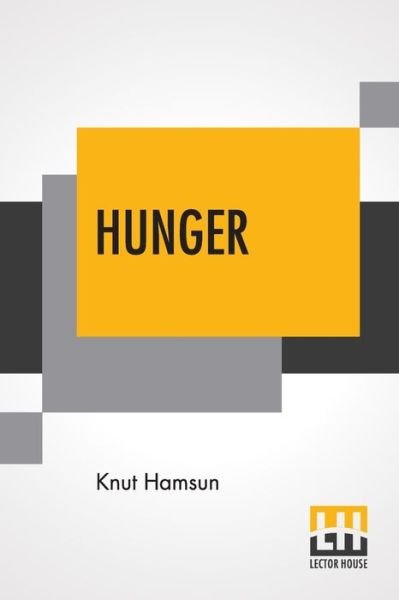
![Cover for Knut Hamsun · Victoria (Pocketbok) [1:a utgåva] (2018)](https://imusic.b-cdn.net/images/item/original/618/9788702244618.jpg?knut-hamsun-2018-victoria-pocketbok&class=scaled&v=1533628872)
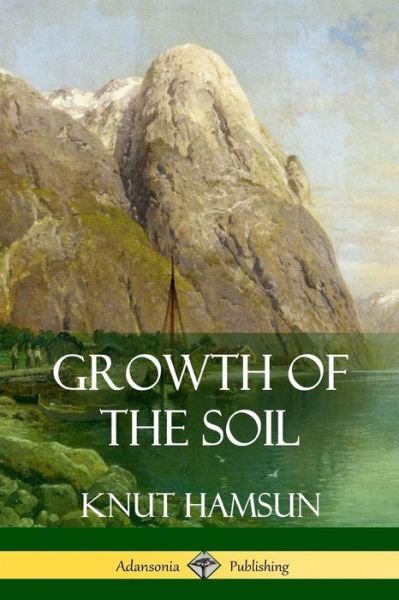



![Cover for Knut Hamsun · Hunger - Canons (Pocketbok) [Main - Canons Imprint Re-Issue edition] (2016)](https://imusic.b-cdn.net/images/item/original/124/9781782117124.jpg?knut-hamsun-2016-hunger-canons-pocketbok&class=scaled&v=1457604160)
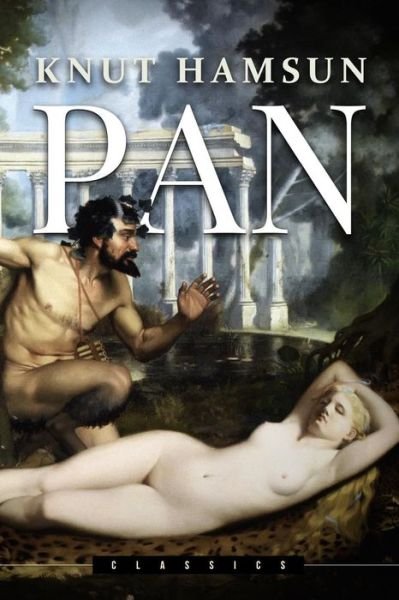
![Cover for Knut Hamsun · Hunger (Penguin Twentieth-century Classics) (Pocketbok) [Open Market Ed edition] (1998)](https://imusic.b-cdn.net/images/item/original/649/9780141180649.jpg?knut-hamsun-1998-hunger-penguin-twentieth-century-classics-pocketbok&class=scaled&v=1418732682)