Tipsa dina vänner om produkten:
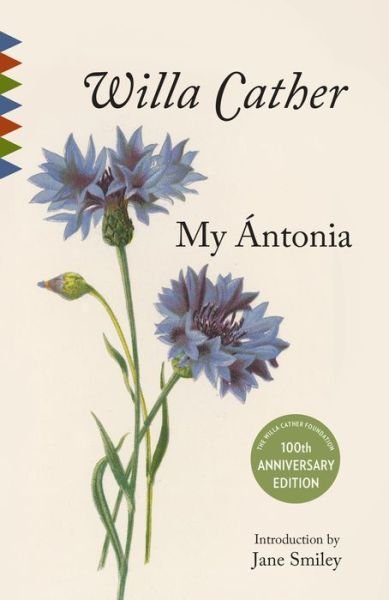
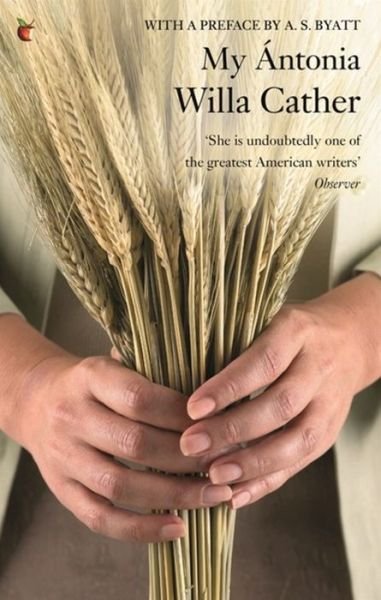
My Antonia Willa Cather


Finns även som:
-
PocketbokBantam Classics edition(1994) SEK 109
- Pocketbok (2023) SEK 139
-
PocketbokNew edition(1995) SEK 139
- Pocketbok (2024) SEK 159
- Pocketbok (2000) SEK 169
-
BokWarbler Classics Annotated edition(2022) SEK 169
- Inbunden Bok (2025) SEK 179
- Inbunden Bok (1996) SEK 179
- Pocketbok (2012) SEK 179
- Pocketbok (2016) SEK 189
- Pocketbok (2011) SEK 189
- Pocketbok (2008) SEK 209
- Pocketbok (2011) SEK 219
-
PocketbokUnabridged edition(2024) SEK 239
- Pocketbok (2003) SEK 279
- Inbunden Bok (2011) SEK 289
- Inbunden Bok (2018) SEK 319
- Inbunden Bok (2007) SEK 329
- Inbunden Bok (2016) SEK 329
- Inbunden Bok (2006) SEK 369
-
Inbunden BokRoyal Collector's edition(2021) SEK 479
My Antonia
Willa Cather
My Ántonia is a novel published in 1918 by American writer Willa Cather, considered one of her best works. It is the final book of her "prairie trilogy" of novels, preceded by O Pioneers! and The Song of the Lark.
The novel tells the stories of an orphaned boy from Virginia, Jim Burden, and the elder daughter in a family of Bohemian immigrants, Ántonia Shimerda, who are each brought as children to be pioneers in Nebraska towards the end of the 19th century. Both the pioneers who first break the prairie sod for farming, as well as of the harsh but fertile land itself, feature in this American novel. The first year in the very new place leaves strong impressions in both children, affecting them lifelong.
This novel is considered Cather's first masterpiece. Cather was praised for bringing the American West to life and making it personally interesting.
INTRODUCTION
LAST summer I happened to be crossing the plains of Iowa in a season of intense heat, and it was my good fortune to have for a traveling companion James Quayle Burden--Jim Burden, as we still call him in the West. He and I are old friends--we grew up together in the same Nebraska town--and we had much to say to each other. While the train flashed through never-ending miles of ripe wheat, by country towns and bright-flowered pastures and oak groves wilting in the sun, we sat in the observation car, where the woodwork was hot to the touch and red dust lay deep over everything. The dust and heat, the burning wind, reminded us of many things. We were talking about what it is like to spend one's childhood in little towns like these, buried in wheat and corn, under stimulating extremes of climate: burning summers when the world lies green and billowy beneath a brilliant sky, when one is fairly stifled in vegetation, in the color and smell of strong weeds and heavy harvests; blustery winters with little snow, when the whole country is stripped bare and gray as sheet-iron. We agreed that no one who had not grown up in a little prairie town could know anything about it. It was a kind of freemasonry, we said.
Although Jim Burden and I both live in New York, and are old friends, I do not see much of him there. He is legal counsel for one of the great Western railways, and is sometimes away from his New York office for weeks together. That is one reason why we do not often meet. Another is that I do not like his wife.
| Media | Böcker Pocketbok (Bok med mjukt omslag och limmad rygg) |
| Releasedatum | 1918 |
| ISBN13 | 9786057566607 |
| Utgivare | E-Kitap Projesi & Cheapest Books |
| Antal sidor | 286 |
| Mått | 152 × 229 × 16 mm · 421 g |
| Språk | Engelska |









![Cover for Willa Cather · My Antonia (Royal Collector's Edition) (Case Laminate Hardcover with Jacket) (Inbunden Bok) [Royal Collector's edition] (2021)](https://imusic.b-cdn.net/images/item/original/455/9781774762455.jpg?willa-cather-2021-my-antonia-royal-collector-s-edition-case-laminate-hardcover-with-jacket-inbunden-bok&class=scaled&v=1653905627)
![Cover for Willa Cather · My Antonia - Bison Classic Editions (Pocketbok) [Special edition, A Bison Classic edition] (2013)](https://imusic.b-cdn.net/images/item/original/709/9780803245709.jpg?willa-cather-2013-my-antonia-bison-classic-editions-pocketbok&class=scaled&v=1493063003)
![Cover for Willa Cather · My Antonia - Dover Thrift Editions (Pocketbok) [New edition] (2000)](https://imusic.b-cdn.net/images/item/original/404/9780486282404.jpg?willa-cather-2000-my-antonia-dover-thrift-editions-pocketbok&class=scaled&v=1486069620)



![Cover for Willa Cather · My Antonia - The Great Plains Trilogy (Pocketbok) [Reprint edition] (1994)](https://imusic.b-cdn.net/images/item/original/649/9780140187649.jpg?willa-cather-1994-my-antonia-the-great-plains-trilogy-pocketbok&class=scaled&v=1409708963)
![Cover for Willa Cather · My Antonia - The Great Plains Trilogy (Pocketbok) [Reprint edition] (2014)](https://imusic.b-cdn.net/images/item/original/266/9780451466266.jpg?willa-cather-2014-my-antonia-the-great-plains-trilogy-pocketbok&class=scaled&v=1409742404)
![Cover for Willa Cather · My Antonia - Willa Cather Scholarly Edition (Inbunden Bok) [Scholarly edition] (1995)](https://imusic.b-cdn.net/images/item/original/682/9780803214682.jpg?willa-cather-1995-my-antonia-willa-cather-scholarly-edition-inbunden-bok&class=scaled&v=1409950150)
![Cover for Willa Cather · My Antonia - Willa Cather Scholarly Edition (Pocketbok) [Scholarly edition] (2003)](https://imusic.b-cdn.net/images/item/original/335/9780803264335.jpg?willa-cather-2003-my-antonia-willa-cather-scholarly-edition-pocketbok&class=scaled&v=1493062767)


![Cover for Willa Cather · My Antonia: Drop Caps (Inbunden Bok) [C edition] (2012)](https://imusic.b-cdn.net/images/item/original/156/9780143123156.jpg?willa-cather-2012-my-antonia-drop-caps-inbunden-bok&class=scaled&v=1489434596)